Online Teenage Counseling

Online teenage counseling is real therapy delivered over secure video: individual sessions with a licensed clinician, group work with other teens, and structured family involvement, all from home. 

The format is the easy part to explain. What parents actually want to know is what happens inside it: what those first sessions look like, whether their teen will really open up, and how to tell it’s working.

This article walks through what your teen and your family actually experience once counseling starts: the first sessions, the fears most teens bring with them, and the signs it’s working, told by our Clinical Director, Dr. Jacqueline Pablos, the way we tell it to parents on the phone. 

If you’re still weighing whether online is the right format for your teen, our guide on online therapy for teens in Florida covers that decision.

What Online Teenage Counseling Actually Includes

The word “counseling” covers a wide range, and knowing which version you’re looking at matters more than the screen. 

Research shows online counseling performs comparably to in-person care when teens stay engaged, but the structure of the sessions usually determines that engagement.

Once-a-week video counselingA structured online program
SessionsOne individual session per weekGroup therapy multiple days a week, plus individual sessions
TeamOne therapistA clinical team: therapist, group leaders, clinical director
Family roleOccasional check-ins, if anyWeekly coaching calls and a parent support group
Best forTeens with mild symptoms who are functioning wellTeens who need more than an hour a week

Weekly teen counseling is the right level for a teen who is distressed but still functioning: attending school, engaged with life, able to practice skills between sessions. When symptoms run deeper, one hour a week, on a screen or in a room, usually isn’t enough. That’s what our Online Teen Therapy program exists for.

“We’re not sending your kid a video to watch. It’s a program, with a team behind it.” Dr. Jacqueline Pablos, Clinical Director, AWA
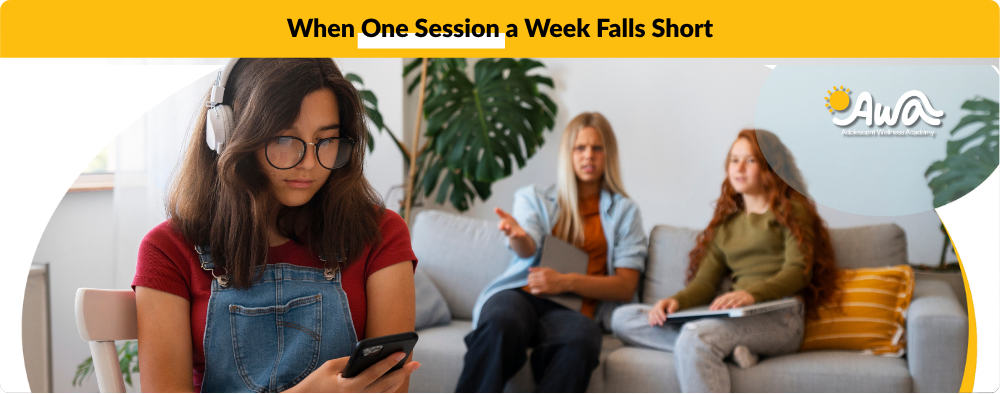
When one session a week falls short

What Your Teen Is Actually Afraid Of

Before the first session, almost every teen carries the same three fears. Naming them at home, before day one, does more good than most parents expect.

“Are you going to tell my mom what I said?”

The number one fear, every time. Here’s how we handle it: everything is confidential between your teen and their therapist, with one exception: safety. If there’s any risk of your teen harming themselves or someone else, we bring you in. And even then, we don’t go behind their back. We tell them: this sounds big, let’s talk about it with your parents together.

“If I’m honest, will you send me away?”

Teens who’ve been through the system before ask this one. Having dark thoughts does not mean an automatic hospital or residential placement. It means we work to understand where those thoughts come from. Any decision about a higher level of care is a conversation your teen is part of, never a surprise.

“If I tell you everything, will I have to stay longer?”

The honest answer we give teens: the opposite. Holding back is what slows treatment down. Opening up early is what moves it.

“Teens open up when they trust the room is theirs. Protecting that is what makes treatment work.” Dr. Jacqueline Pablos

You’ll always know the themes, the skills your teen is learning, and anything touching safety. What they said, word for word, stays theirs.

What the First Weeks Actually Look Like

Most parents expect therapy to start on day one. It doesn’t, and knowing the real sequence saves a lot of doubt in week two.

Sessions one and two are groundwork. Research on youth mental health treatment suggests that the therapeutic alliance established during the first session can be an early indicator of treatment progress, which is why these initial meetings focus heavily on trust, comfort, and understanding the teen’s needs.

The first weeks can look worse before they look better. An increase in behaviors or symptoms early in treatment is common and expected. Your teen is being asked to open things they’ve kept shut. Don’t read it as failure.

Six to eight weeks is when parents usually see it. The teen who fought logging in stops fighting it. They start talking at home. Symptoms ease. School conflict softens.

One early sign we always tell parents to watch for: your teen asking when their next session is. That small question means trust is being built, and it usually shows up before any other change does.

If you’re weeks into counseling somewhere else and none of this is happening, that’s worth a conversation: 1-754-285-7576.

What You Should Expect From Us as the Parent

When parents call us, they usually want three things from a counselor: someone who communicates, someone who gives them guidance for home, and someone who can get a teen to open up when “they don’t talk to me” has become the norm.

Here’s what that looks like in our online program, every week:

  • A coaching call with your teen’s therapist. How they’re progressing, what you’re seeing at home, and what to do with it. You have your teen every day. We have them for a few hours. Both views matter.
  • A parent support group, run by the clinical director, with other parents going through the same thing. This is where you learn what your teen is learning so you can back it up at home. It’s also the one hour a week that’s for you, because parenting a struggling teen is exhausting, and parents don’t get many places to say that out loud.
  • Family sessions are added when the work is ready for the whole family to be in the room.

If a program you’re considering can’t clearly answer “what’s the parent’s role,” keep looking.
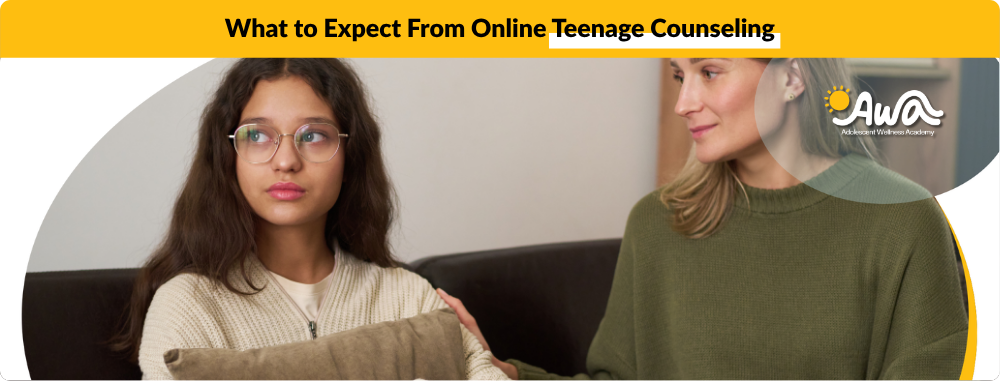
What to Expect From Online Teenage Counseling

If You’re a Teen Reading This

Your counselor is not against you. What you say stays between you two unless your safety is on the line, and even then, nothing happens behind your back. You’ll be part of every decision.

You also won’t be talking to a screen full of strangers for long. In a group, you’re with other teens dealing with things a lot closer to yours than you’d guess. Most of them didn’t want to be there at first either. That changes faster than you’d think.

And one thing that’s actually true: the more honest you are early, the faster this goes. Holding back doesn’t protect you. It just stretches it out.

Online Teenage Counseling at AWA

We serve families across Florida, from teen counseling in Miami and Broward to families hours from any of our centers.

Our online program includes:

  • Individual therapy with a licensed clinician
  • Therapist-led group sessions built on CBT and DBT
  • Weekly parent coaching calls and a parent support group
  • A clinical assessment before enrollment, because online has to genuinely fit your teen, and we’ll tell you honestly if it doesn’t

The virtual schedule runs Tuesday through Thursday, 4:00 to 7:00 pm, around the school day.

If your teen needs the structure of being in a room, our in-person intensive outpatient and therapeutic day programs run in Davie, Miami, and Boca Raton.

We’re in-network with all major commercial insurance providers in Florida, and we verify your coverage before your family commits to anything.

The first call is a conversation, not a commitment: book a free consultation.

Ask a Therapist: Starting Online Counseling

My teen barely talks to me. How is a stranger on a screen going to get anything out of them?

“Parents tell us this constantly, and then the same teen talks for the entire first session. It’s often easier for a teen to open up to someone who isn’t Mom or Dad, someone with no history and no agenda. The screen doesn’t change that. What we do is give them a space with no pressure and no judgment, and most teens fill it.”

Will you tell me what my teen says in sessions?

“We’ll tell you the themes. This week we worked on anger management, or self-esteem, or friendships. We’ll tell you the skills, so you can support them at home. And we’ll always tell you anything that touches safety. What we won’t do is repeat their words back to you, because the moment they think we will, they stop talking, and then nobody can help them.”

What if my teen refuses to do it?

“Most teens don’t want to start. That’s normal, and honestly, valid. What we see over and over is that the resistance fades in the first couple of weeks, once they realize we’re advocating for them, not reporting on them. If your teen is refusing outright, get curious about why before pushing. Usually the fear underneath is one of the three we covered above, and naming it changes the conversation.”

How long will my teen be in counseling?

“There’s no one-size answer, and we won’t pretend there is. What we can promise is that you’ll be part of the timeline. After the assessment and treatment plan are completed, we set goals together and review them regularly. And when a teen is honest, and the family is engaged, things move faster. Our job is to work ourselves out of a job.”

Frequently Asked Questions

How does online counseling work for a teenager?

Sessions happen over secure video from a private space at home. In a structured program, teens attend therapist-led group sessions several afternoons a week plus individual therapy, and parents have weekly touchpoints of their own. The clinical work is the same as in-person care. The room is the only thing that changes.

What happens in the first online counseling session?

The first session is an assessment: your teen’s history, what’s been happening, and what’s underneath it. The second session focuses on developing a treatment plan together. The deeper therapeutic work usually begins from the third session on, once the groundwork and trust are in place.

How long does teen counseling take to work?

Expect groundwork in the first two sessions and possibly a bump in symptoms in the early weeks, which is normal. Most families start seeing real change at six to eight weeks: less resistance, more communication at home, and easing symptoms. Honest engagement from the teen and involvement from the family speed it up.

At what age is online counseling appropriate?

Our online program serves adolescents ages 13 to 17. For this age group, video-based counseling works well because teens are already comfortable communicating on screens. Younger children typically need in-person, play-based approaches that don’t translate to video as effectively.
About the Author

Clinical Director

Discover how our judgment-free, evidence-based care can support your teen mental health and your family

Request a call back and our admissions team will get in touch with you to answer all your questions.

We will support you in finding the right treatment for your teen – even if it is not ours.

We are here to help 24/7.

This field is for validation purposes and should be left unchanged.

Note we are not a crisis hotline, in case of emergency, please call 911 

Diego2

Diego Hernandez - Therapist (Davie)

Diego Hernandez is a Mental Health Counseling student completing his Master’s degree at Nova Southeastern University.

He is bilingual in English and Spanish and has extensive experience working with adolescents, families, and young adults from diverse cultural backgrounds who are navigating trauma, family conflict, depression, and anxiety.
Diego’s therapeutic approach centers on creating an empowering and supportive space where clients feel safe to fully express themselves. He integrates Acceptance and Commitment Therapy (ACT), Narrative Therapy, Cognitive Behavioral Therapy (CBT), and Dialectical Behavior Therapy (DBT) to help clients identify what truly matters to them and work toward meaningful, values-based change.

Diego also incorporates a systemic perspective, recognizing the importance of relationships and family dynamics in supporting long-term growth and emotional wellness.

Tatiana Shiber - Therapist (Davie)

Tatiana Lourenco Shiber, MS, RMHCI is a Registered Mental Health Counselor Intern with a Master’s degree in Clinical Mental Health Counseling from Nova Southeastern University. She has extensive experience working with adolescents navigating intellectual disabilities, trauma, self-harm, family conflict, depression, and anxiety. Tatiana has also worked with diverse populations providing culturally responsive and affirming care.
 
Tatiana’s therapeutic approach is strength-based and incorporates evidence-based modalities such as Cognitive Behavioral Therapy (CBT), Dialectical Behavior Therapy (DBT), Trauma-Focused CBT (TF-CBT) and Narrative therapy. Tatiana is passionate about creating a safe and supportive environment where clients feel empowered to build resilience, develop healthy coping skills, and foster meaningful change. She is dedicated to walking alongside her clients in their healing journey with compassion, authenticity, and respect.

Tiffany Rivera - Therapist (Davie)

Tiffany Rivera holds a Master’s degree in Clinical Mental Health Counseling from Walden University and a Bachelor’s degree in Psychology from Florida Atlantic University.

With a passion for empowering young people, Tiffany specializes in client-centered approaches that foster trust, growth, and resilience. She brings a strong background in mentoring youth and supporting individuals struggling with substance use, always meeting clients with empathy, patience, and genuine care.

Tiffany is known for her compassionate nature, strong communication skills, and unwavering commitment to helping adolescents navigate life’s challenges.

Ornella Barille - Therapist (Davie)

Ornella is a Registered Mental Health Counselor Intern and holds a Master’s in Clinical Mental Health Counseling from Nova Southeastern University. She is bilingual in English and Spanish and has extensive experience working with diverse populations, including children, families, and young adults. Ornella has worked in both K-12 schools and at the college level, where she has developed a strong commitment to helping adolescents thrive by supporting their personal and academic growth and empowering them to reach their full potential.

Her therapeutic approach centers on creating a safe and welcoming environment where clients can feel comfortable exploring their needs and expressing themselves authentically. Ornella utilizes a blend of mindfulness, existential therapy, and cognitive-behavioral techniques to empower clients in navigating life’s challenges.

Ornella’s compassionate approach fosters self-awareness and encourages clients to build effective coping strategies to achieve their therapeutic goals.

Jamie Namer - Therapist (Davie)

Jamie specializes in Marriage and Family Therapy (MFT) guiding individuals and families toward healthier, more fulfilling lives. With a focus on positivity, self-growth, and holistic healing, Jamie integrates spiritual perspectives and deep empathy into the therapeutic process. Using solution-based methods and emotionally focused therapy, Jamie helps clients navigate past trauma, enhance self-discovery, and strengthen relationships.

Jamie’s approach combines therapeutic techniques with mind-body healing practices such as meditation, mindfulness, and visualization. Experienced in working with children, adolescents, adults, families, and groups, Jamie specializes in addressing issues like anxiety, grief, self-confidence, burnout, family dynamics, depression, PTSD, and life transitions. The goal is to promote overall well-being and support clients in living a balanced, healthy lifestyle.

Dr. Maria Angelica Mejia – Clinical Director (Davie)

Dr. Maria Angelica Mejia’s therapeutic approach is rooted in empathy, resilience-building, and collaboration. As the Clinical Director for Adolescent Wellness Academy, she is dedicated to supporting high-risk teens in navigating trauma, emotional distress, and life’s challenges with a holistic and trauma-informed lens. Dr. Mejia specializes in working with adolescents facing issues such as suicide risk, self-harm, anxiety, depression, and family conflict, utilizing techniques like CBT, DBT, mindfulness, and strength-based therapy. With extensive experience in community mental health, private practice, and clinical supervision, Dr. Mejia has a proven track record of empowering teens to overcome obstacles and thrive. She holds a PhD in Marriage and Family Therapy bringing a depth of knowledge and compassion to her leadership role.

Kimberly Geller - Primary Therapist (Davie)

Kimberly is a compassionate and dedicated therapist with a Master’s degree in Social Work from Florida International University. Kimberly creates a nurturing and secure environment where clients can freely explore their emotions and embark on their journey toward healing and growth. Kimberly specializes in client-centered approaches that helps tailor her therapeutic methods to meet unique needs and goals. By fostering a collaborative therapeutic relationship, she empowers clients to develop effective coping skills and achieve meaningful progress in their mental health journey. Kimberly ensures that each person she works with feels understood and valued throughout their therapeutic process.

Zainub Fatta - Therapist (Davie)

Zainub holds a Master’s degree in Marriage and Family Therapy from Nova Southeastern University and has extensive experience treating a wide range of mental health issues in adults, teens, and children. She specializes in treating diverse mental health struggles such as anxiety, depression, trauma, bipolar disorder, social anxiety, anger management, etc. She also has a lot of experience treating addiction and substance abuse problems within various treatment centers. Zainub views mental health from a systemic perspective, emphasizing the significance of how one’s environment and childhood impacts them, which is why she also specializes in family therapy and couples therapy, when it comes to achieving holistic well-being. Passionate about empowering individuals to find their voice, she considers it a privilege to listen to their vulnerable stories and provide the support they need. Her therapeutic approach focuses on uplifting clients by building their confidence and challenging them to break old, negative patterns of thinking and behavior.

Krystine Garay

Krystine Garay – Licensed Mental Health Counselor

Krystine Garay is a licensed mental health counselor, marriage family therapist, and certified telehealth practitioner. Raised in Miami, Florida, and a member of the Hispanic community, she provides services in both English and Spanish. With five years of experience, she has worked with children, adolescents, and adults, focusing on domestic violence, substance abuse, family conflicts, co-occurring disorders, and mental health issues.
Krystine holds a bachelor’s degree in Psychology from Florida International University and a master’s degree with dual specializations in mental health and marriage and family counseling from Barry University. She is pursuing a doctorate in clinical psychology with a concentration in health psychology from Carlos Albizu University.
Her clinical experience includes rotations at Nicklaus Children’s Hospital, where she assisted children with co-occurring disorders using mindfulness exercises, cognitive-behavioral strategies, and dialectical-behavioral techniques.
Krystine believes in the power of personal growth and progress, and she is dedicated to fostering positive change in her clients’ lives.

Alyssa Mencucci – Therapist (Miami)

Alyssa is a dedicated master’s level clinician specializing in providing compassionate
therapy for adolescents and children facing severe mental health challenges. With a
deep understanding of the developmental stages and psychological needs of
adolescents and children, Alyssa offers expertise in addressing trauma-related issues,
guiding individuals through the complexities of grief, managing anxiety and depression,
navigating personality disorders, and supporting those dealing with PTSD. Alyssa uses
evidence-based techniques such as cognitive-behavioral therapy, DBT, play therapy,
and trauma-focused interventions to create a safe and nurturing environment for
healing. Alyssa believes in a client-centered approach, tailoring therapy to meet the
unique needs and circumstances of each individual. She creates a safe and nurturing
environment where adolescents and children can explore their emotions, develop
coping skills, and embark on a journey of healing and growth.

Dr. Jacqueline Pablos – Clinical Director

Vulnerability and connection are at the heart of Dr. Pablos’ therapeutic approach. As the
Clinical Director for Adolescent Wellness Academy, she aims to create a safe space for
clients to embrace their emotions and express their needs in healthier ways. Dr. Pablos
specializes in treating depression, anxiety, body image issues, bullying, eating
disorders, and self-harm behaviors using techniques like CBT, DBT, mindfulness, and
ACT.
With extensive training in hospitals and counseling centers, Dr. Pablos has a strong
background in helping teens and adults with co-occurring mental and physical health
disorders. She holds a Doctoral Degree in Clinical Psychology, with specialized training
at institutions like Florida International University, Jackson Memorial Hospital,
Clementine Monte Nido, and Nicklaus Children’s Hospital.

Kimberly

Kimberly Carlesi – Therapist (Miami)

Kimberly, a dedicated therapist with a Master’s Degree in Clinical Mental Health
Counseling from Florida International University, specializes in supporting individuals
with eating disorders, trauma, and substance abuse. She creates a safe, nurturing
environment for her clients’ healing journeys, drawing from diverse therapeutic
modalities like cognitive-behavioral therapy and dialectical behavior therapy. With a
focus on trust and collaboration, Kimberly empowers clients through personalized
interventions, fostering self-awareness and resilience.