When families call Adolescent Wellness Academy, they usually say something like, “I do not recognize my kid right now.” Dr. Maria Angelica Mejia, Clinical Director at AWA Davie, hears that every week. In her work with teens ages 13 to 17, she sees how quickly anxiety, depression, trauma, and behavior problems can disrupt school, friendships, and home life.
Dr. Mejia breaks down teen mental health signs parents often miss, what those changes can look like in real teen life, and how AWA supports teens and families through teen counseling, IOP, and the Therapeutic Day Program.
Why Teen Mental Health Signs Can Be Easy To Miss
Dr. Mejia puts it plainly. Many teens told their parents years ago that they needed help, only to be brushed off as typical teen behavior.
She says, “If your kid is actually asking for help, even if you don’t know a reason for their help, I would take them to see a specialist.”
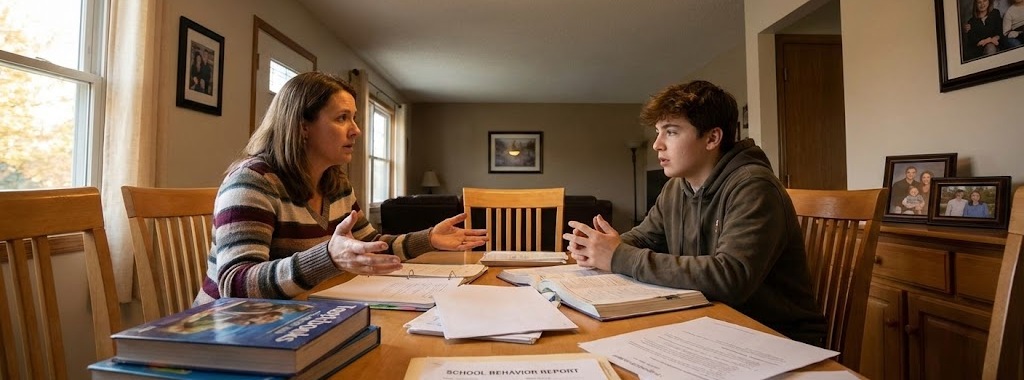
That matters because teen mental health signs often look like attitude, avoidance, or a sudden drop in motivation. Parents may see eye rolls and slammed doors, but miss the pattern underneath.
Common ways teen mental health signs show up at home:
- A teen isolates and becomes nonverbal at home
- Irritability increases, and conflict escalates fast
- Sleep and appetite patterns change
- Family routines become a daily fight
What AWA Clinicians See Most Often
When Dr. Mejia describes the day-to-day clinical picture, she talks about severity and complexity. She sees “severe depression, severe anxiety,” mood concerns that have not been diagnosed accurately, and neurodivergence like ADHD that has not been managed well. She also sees “complicated grief and severe bullying,” self-harm, suicidal ideation, and teens with multiple hospitalizations before they find a level of care that fits.
She explains that many of these teens are high-risk and acute, and families often arrive after “very minimal progress” with weekly outpatient therapy.
At AWA, the goal is not to judge what happened before. The goal is to respond to what is happening now.
Related concerns that may travel together:
- Teen anxiety and school avoidance
- Teen depression and isolation
- Teen substance use as a coping strategy
- Co-occurring disorders, such as depression plus substance use
How Teen Anxiety And Teen Depression Can Look Different Than Adults
Dr. Mejia says one of the biggest differences is autonomy. Adults can often change their environment. Teens cannot. Teens still have to go to school, stay in systems that feel stressful, and live inside family dynamics even when those dynamics feel unsafe.
In school, she explains, teen anxiety and teen depression can show up as learning shutdown, low performance, and behavior changes. She says when anxiety and depression rise, “our prefrontal cortex, the part of the brain that allows us to learn, to progress, to be better, goes down.” Then even a strong student can start failing because the brain is stuck in survival.
Teen mental health signs at school:
- Grades drop fast after a stable stretch
- Absences increase, and mornings become battles
- Detentions and suspensions become frequent
- A teen reports constant stomach or GI issues tied to school stress
Teen mental health signs with friends:
- A teen clings to friends as a lifeline
- a teen isolates, bails on plans, and stops responding
- Friendship ruptures lead to drama, fights, lies, and conflict
Teen mental health signs at home:
- A teen stays in their room and avoids connection
- Irritability and anger rise, sometimes with aggression
- Panic or anxiety attacks happen in isolation
These are not just mood swings. These are teen mental health signs that often reflect overwhelm, fear, and a sense of being trapped.
Early Warning Signs Parents Often Brush Off
Dr. Mejia says the first warning sign is simple: your teen asks to talk to a therapist. She also flags drastic changes in behavior. “Becoming a teenager doesn’t mean you change your essence,” she says.
She also points parents toward practical, observable shifts that are easy to track without guessing what is happening inside your teen’s head.
Teen mental health red flags that deserve attention
- A teen directly says, I feel depressed, I feel anxious, or I need help
- Behavior changes feel sudden and out of character
- School attendance slips, even when academics used to be stable
- Social withdrawal increases, especially after a breakup or friendship rupture

Social Withdrawal And Friendship Changes Can Spiral Fast
Dr. Mejia describes a common story: a teen experiences a rupture, then decides they are not lovable, then stops trying, then loneliness turns into depression and suicidal ideation. She emphasizes that peer pain is real pain for teens. When a teen gets rejected, it can feel physically painful, not just emotionally painful.
She also explains why AWA leans on groups as a core part of treatment. Teens need a safe connection with peers to rebuild trust in relationships.
She says group therapy helps teens relearn, “I can make friends, and I’m not going to be abandoned.” For many families, that shift becomes one of the most visible signs of progress.
Teen Substance Use Often Starts As Coping
Dr. Mejia says most teens who enter care are not using substances for fun. They are used to cope. She describes the moment a teen tries a vape or weed and suddenly feels relief, and how quickly that becomes self-medication.
She also frames it in a way that reduces shame. “We don’t see them as drug addicts, we see them as kids that have been medicating because they haven’t been properly treated,” she says.
Teen substance use signs that may reflect coping:
- Calm racing thoughts or panic
- Numb emotional pain
- Get through school or social pressure
- Using more often after conflict, bullying, or grief
What Self-Harm Can Mean And What Parents Often Misunderstand
Dr. Mejia says self-harm scares parents the most, and she wants parents to know one key truth. “Self-harm is not always suicide.” She explains that non-suicidal self-injury can be a way to convert emotional pain into physical pain because emotional pain feels unmanageable.
She describes self-harm as a red flag that a teen is carrying so much distress that pain becomes a form of relief and control. She also warns that punishment and yelling can add shame on top of shame. She encourages parents to approach with curiosity, “What hurts? What happened? How can I help? Do you need a hug?”
If you are looking for teen mental health signs that require fast support, self-harm is on that list.
- Cutting or burning
- Starving or depriving themselves
- Pulling away from anything that brings joy
- Hiding injuries or avoiding short sleeves
When It Is Time To Look Beyond Weekly Therapy
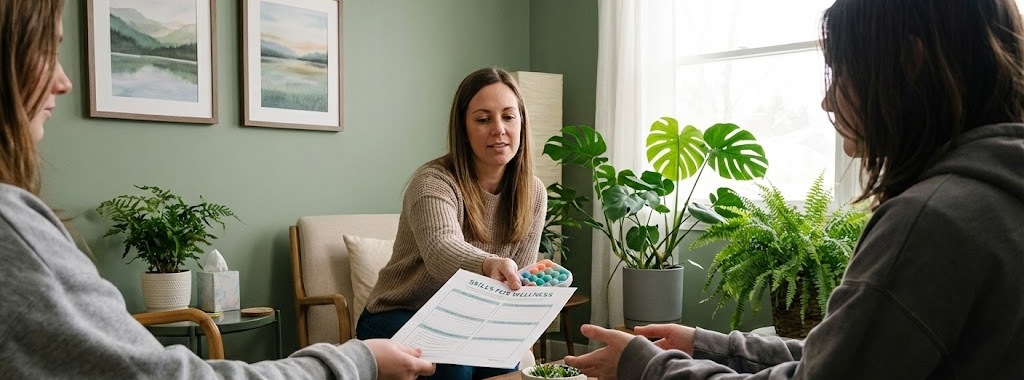
One of the clearest themes in Dr. Mejia’s interview is intensity. Weekly outpatient therapy can help, but some teens cannot engage one-to-one, and many families are trying to address serious issues “one hour out of your entire week.”
She also explains why peers matter. Teens can feel alone, weird, or abnormal in a private office. In a group with other teens, they realize the core experience is shared, intense emotions they do not know how to manage, and disconnection at school, with friends, and at home.
That is where levels of care can change the trajectory. AWA offers multiple levels of care so the plan can match the need, not the other way around.