Families often search for teen day treatment when school, mental health, and home life start colliding all at once.
At Adolescent Wellness Academy, Dr. Maria Mejia, PhD, LMFT, Clinical Director for AWA Davie, explains how AWA builds structured teen therapy that supports academic progress while addressing the emotional and behavioral issues that disrupt school in the first place.
Teen Day Treatment, IOP, And Teen Counseling: Time, Structure, Intensity
When parents compare programs, Dr. Mejia encourages them to look beyond labels and focus on how much support a teen needs each day and week.
AWA offers three core levels that meet different needs in teen therapy in South Florida and Miami.
Therapeutic Day Program (PHP) As Teen Day Treatment
Dr. Mejia describes AWA’s Day Program as “our highest level of care that we offer here.”
She also calls it “that in-between level” for teens who might otherwise need inpatient hospitalization or who cycle between weekly therapy and crisis stabilization.
AWA’s teen day treatment provides a predictable routine, consistent clinical support, and a safe environment during the day. Dr. Mejia emphasizes structure because “having a routine and a structure is so important” when teens try to stabilize mood, reduce risky behaviors, and rebuild school participation.
- Day Program typically runs from 11:00 AM to 4:00 PM
- Many teens also complete schoolwork onsite in the morning with staff support, depending on their academic plan

Intensive Outpatient Program As A Teen Intensive Outpatient Program
Dr. Mejia describes the teen intensive outpatient program as the “after-school program,” typically from 4:00 PM to 7:00 PM. This schedule helps teens attend school during the day, then receive structured therapy and skills work in the evenings.
She explains that both PHP and IOP include group therapy, individual therapy, family work, and psychiatric support when needed. The difference shows up in intensity.
In the Day Program, teens may complete “three groups a day,” while IOP typically includes “two groups a day.”
She also notes that Day Program clients often complete “two to three individual sessions a week,” while IOP clients often complete “one to two,” depending on clinical need.
Teen Counseling As A Standalone Option
Dr. Mejia describes teen counseling as a fit when a teen can still keep up with school and daily routines while working through symptoms with weekly support. She tells families she evaluates “severity, intensity, duration, and frequency” of symptoms before recommending a level of care.
For many families, teen counseling Miami works best when a teen can engage in weekly sessions, practice skills between sessions, and stay safe without daily monitoring.
School Disruption Often Signals A Bigger Mental Health Problem
Many parents worry about school disruption, but Dr. Mejia reframes the question. She asks families to consider whether a teen’s mental health challenges already threaten school success, even before treatment begins.
She describes how teens can look capable on paper but still struggle daily. A teen might earn strong grades yet still miss class due to anxiety, bullying, social stress, or emotional overwhelm. Dr. Mejia highlights a common scenario: a teen might feel severe social anxiety, avoid school, and start failing “because they’re not showing up to class,” not because they lack ability.
School stress often shows up as
- Frequent absences or refusal to attend
- Physical symptoms tied to anxiety, including “constant GI” issues
- Morning battles, where it becomes “a fight every morning.”
- Behavior issues that trigger detention, suspension, or expulsion risk
- Social isolation that grows during virtual schooling
When these patterns persist, Dr. Mejia often recommends teen day treatment because it gives a teen daily structure and multi-hour support while the family works toward stability.
Academic Support Inside Teen Day Treatment
Parents often ask how a teen can focus on mental health without losing academic progress. Dr. Mejia validates the concern and speaks directly to high-achieving families. She notes that AWA works with “high achievers, perfectionistic” teens with strong goals. She also asks families to weigh a long-term reality: “Is my child’s mental health or behavioral issues going to put those dreams at risk?”
Dr. Mejia explains that AWA does not treat school as the top priority during the Day Program, because the program focuses on stabilization first. At the same time, AWA supports academic progress through structured time, coordination, and reduced distractions.
How AWA embeds academics into the Day Program
- Morning school time onsite, often around 8:30 or 9:00 AM to 10:30 AM
- A quiet space that reduces home distractions and electronics
- Staff support that helps teens stay on task and complete assignments
- Coordination with Florida Virtual School when families use that option
Dr. Mejia describes a close working relationship with Florida Virtual School, including communication that supports scheduling and academic planning.
When mental health blocks attendance, teen day treatment can protect school progress by restoring routine first, then rebuilding consistency.
How Dr. Mejia Explains Length Of Stay Without A Rigid Timeline
Parents often want an exact timeline, especially when school schedules drive everything. Dr. Mejia avoids promises.
She tells families that their teen is a “unique individual,” and that AWA does not use a “one-size-fits-all approach.” She explains that she cannot guarantee “how quickly we’ll see results,” but she can promise family involvement and clear planning.
She describes a simple process:
- During the first week to two weeks, the team completes assessments and learns the teen’s needs
- The team builds a treatment plan with goals and objectives
- Families receive weekly contact with the therapist to discuss progress and adjustments
Dr. Mejia also shares typical ranges as averages, not rules. She says many teens in PHP take “about two to three months” to stabilize and step down to IOP. She describes the overall model as a step-down “slow titration process,” where a teen starts at a more intensive level and decreases intensity as stability grows.
What often influences the length of stay
- The teen’s current functioning and safety
- School demands and re-entry planning
- Progress on treatment goals
- Family involvement and home support
- Insurance requirements and authorization decisions
AWA uses goals and progress to guide timing, not a fixed calendar.
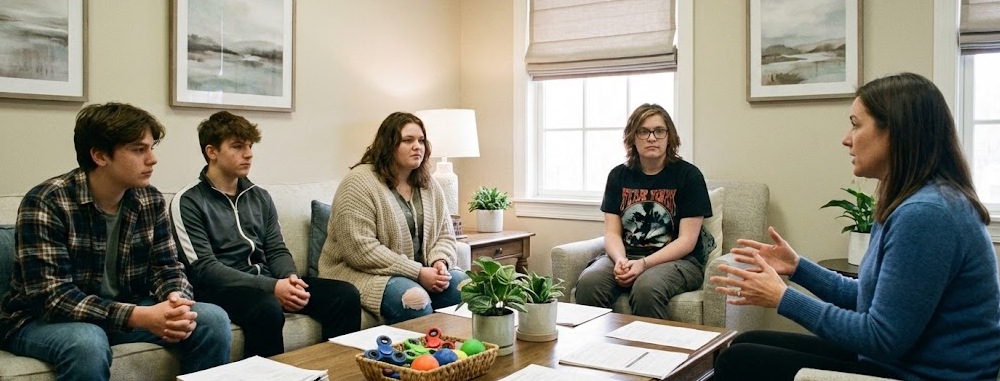
What The First Week Looks Like In Day Program Versus IOP Or Counseling
The first week often carries the most anxiety for both teens and parents. Dr. Mejia describes the first week as a relationship-building phase, not an immediate deep dive into heavy processing.
She says the first week focuses on “getting to know your child, your family, and identifying treatment goals,” plus helping the teen adjust to programming. Many teens have “never done this level of care before,” so the team prioritizes comfort, clarity, and trust.
First Week In Teen Day Treatment
In teen day treatment, the first week often includes two tracks: program adjustment and school planning.
What many teens work on in week one
- Meeting the team and learning the daily routine
- Joining group therapy and learning group expectations
- Starting assessment work that informs treatment goals
- Getting set up for on-site school time, which may include Florida Virtual coordination
- Building a basic time-management plan
Dr. Mejia notes that “nine out of ten times,” families feel more comfortable after the first week because they stop imagining the worst and start seeing the structure clearly.
First Week In IOP Or Teen Counseling
In IOP, teens still adjust to the programming and goals, but the schedule supports daytime school attendance. In teen counseling, the first weeks often focus on rapport, symptom mapping, and early skill-building.
Common first-week goals in IOP or counseling
- Clarify what symptoms disrupt school and home life most
- Identify triggers and early warning signs
- Set realistic goals for the next few weeks
- Create a simple skills plan that the teen can practice between sessions
AWA’s perspective on skill-building and group engagement often comes through its teen-focused therapy resources.
Where Pediatric Psychiatry Fits With School Support
Dr. Mejia explains that psychiatric care supports teens as part of a bigger plan, especially at the Day Program level.
She notes that AWA’s psychiatric provider meets with PHP clients weekly, which helps families who worry about starting medication without close monitoring.
She also addresses common concerns:
- Medication does not act like a “magic pill.”
- Many medications take time to reach full effect
- AWA combines medication decisions with behavioral intervention because “what’s missing is the behavioral intervention” for many teens who tried medication before
- AWA includes parents in decisions and does not provide medication without “explicit permission.”
- AWA uses a “low and slow” approach

A Practical School Focus For Teen Therapy In Miami
Families often arrive after months of chaos. Dr. Mejia encourages them to stop chasing perfect attendance before they address what blocks attendance. AWA uses a level-of-care structure to stabilize the teen, rebuild coping skills, and then guide reintegration into school routines.
A simple way to match the level of care to school’s needs
- Teen counseling in Miami is a good fit when a teen attends school consistently and can practice skills with weekly support.
- Teen intensive outpatient program fits when a teen can attend school but needs structured after-school support to stay stable.
- Teen day treatment fits when school refusal, absences, safety concerns, or major behavioral issues disrupt daily life.
What Progress Can Look Like
Dr. Mejia wants teens to regain routine, rebuild confidence, and reconnect socially in a healthier environment. She describes the end goal in practical terms: a teen who feels ready to return to school and who faces daily challenges with more stability than before treatment.
She also emphasizes that progress shows up in small, consistent wins: more reliable mornings, fewer absences, calmer reactions at home, and better follow-through on coping skills. Over time, teens begin to trust themselves again and feel less overwhelmed by everyday pressures.