Outpatient Treatment for Teens: What It Is and Who It Helps

Outpatient treatment for teens means real, structured mental health care that does not require your teen to live at a facility. It covers everything from weekly counseling to intensive after-school programs to full-day treatment, and for most teens with depression or anxiety, one of those levels is the right answer. 

In this article, Tiffany Rivera, primary therapist at Adolescent Wellness Academy, explains what each level of outpatient care involves, what a session actually looks like from the inside, who each option fits, and how our new online therapy program brings the same structure to teens at home. 

If you have been assuming the choice is weekly therapy or sending your child away, it is not.

The Levels of Outpatient Treatment for Teens

Outpatient care is not one thing. It is a ladder, and the rungs differ in hours, structure, and how much clinical support surrounds your teen each week.

LevelTime commitmentRight for
Weekly counselingAbout 1 hour per weekMild symptoms, life stressors, maintenance after a program
Intensive Outpatient Program (IOP)3 hours a day after school, 3 to 5 days a weekModerate symptoms affecting school, home, or friendships
Therapeutic Day Program (PHP)Full day: 4 to 5 treatment hours plus academic supportSevere symptoms, safety concerns, teens who need daily stabilization

Everything on this ladder is outpatient: your teen sleeps at home every night. The National Institute of Mental Health notes that teens with more severe depression may need day programs rather than weekly therapy alone, and that is exactly the gap the middle and top rungs exist to fill. Residential care sits above all of this, and most teens never need it.

If you are still working out how serious your teen’s situation is, our guide on teenage depression counseling covers how to read the signals.
Outpatient Treatment for Teens

What a Teen Outpatient Session Actually Looks Like

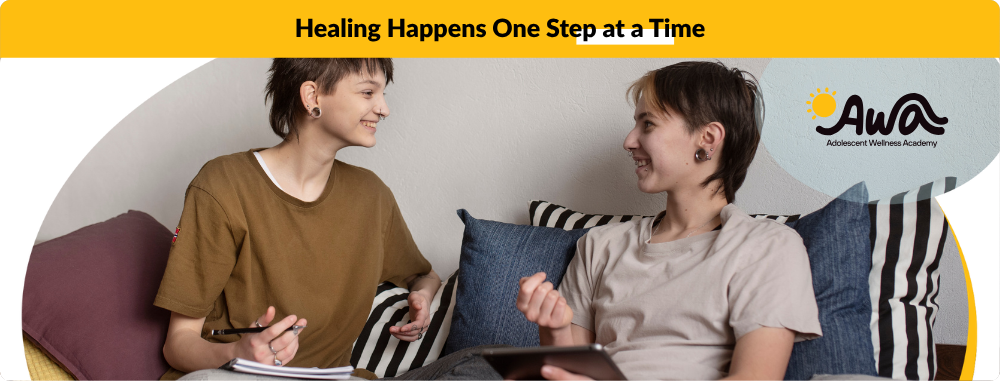
Parents picture outpatient treatment as their teen sitting in a circle being lectured, or worse, sitting in silence. Here is the real structure of an afternoon at AWA, as Rivera runs it.

Teens arrive at 4:00 and start with an emotional check-in, rating their day on a one-to-ten scale they all know. 

Then comes the group topic, opened as a question rather than a lecture: what do you think this means? A short psychoeducation block gives the group shared language, and then the session becomes what it is really for, discussion, with teens connecting the concept to their own lives and, increasingly over the weeks, to each other’s.

Every group closes with the same scale it opened with, so the therapist knows what the session moved. And Rivera watches more than words: posture, fidgeting, who went quiet. 

When something is off, the plan gives way to a processing group on the spot. Some topics run two days because the group takes them deeper than the plan expected. That responsiveness is the difference between a program and a curriculum.

Alongside daily groups, every teen has one hour of individual therapy each week, psychiatry on the team, and parents in the loop through weekly coaching calls and a parent support group.

Want to see whether this structure fits your teen? The intensive outpatient program page has the full breakdown, or call and ask us directly: 754-289-5136.

How to Know Which Level Your Teen Needs

The honest answer is that severity and daily functioning decide, not preference. As a starting point:

  • Weekly counseling is likely enough if symptoms are mild, your teen is functioning at school and home, and they engage with a therapist.
  • IOP is the fit when symptoms are interfering with grades, friendships, or family life, when weekly therapy has stalled, or when your teen needs more support than one hour a week but school should stay in their life.
  • The day program is the fit when symptoms are severe, safety is a concern, or your teen cannot currently manage a school day. Teens typically stabilize there and step down to IOP.

An assessment settles this in one conversation. It is also the honest answer to a question parents are often afraid to ask out loud: is my teen bad enough for this?

Outpatient treatment is not a last resort. Catching depression at the IOP level is how you keep it from becoming a day-program problem.

Online Outpatient Treatment: When Virtual Is the Right Fit

Our new online therapy program runs the same structure as our in-person outpatient care: the same groups, the same individual therapy, the same evidence-based methods, delivered live from home.

It is not a lesser version. For some teens, it is the better starting point. Teens with anxiety or depression tend to isolate, and walking into a building full of strangers can be the barrier that keeps them from starting at all. 

At home, in their own environment, they get the full intensity of treatment while feeling safe enough to be vulnerable, and for many, that comfort becomes the bridge to re-engaging with the world. It also fits families in transition, teens who are grieving, and kids whose communication skills took a hit from the isolation years, who get structured daily practice at connecting again.

Expect pushback the first week or two: sitting in front of a screen for group therapy is an adjustment, and “this is boring” is part of the script. Rivera’s advice to parents is to hold steady, because the switch flips fast. She has had parents call to report their kid logging on fifteen minutes early.

“I won’t quit on your child, so I don’t expect you to do it.” Tiffany Rivera, MS, Primary Therapist, AWA

Curious whether virtual or in-person is the right entry point for your teen? That is a fifteen-minute conversation: book a free consultation.
Outpatient Treatment at Adolescent Wellness Academy

Most families who call us think the choice is binary: either their teen is fine, or something drastic has to happen. Outpatient treatment is the middle they did not know existed, and it is where the vast majority of teens get better.

At AWA that middle has three doors: the after-school IOP, the therapeutic day program, and now online therapy for families who need care to come to them. Every door includes daily groups, individual therapy, psychiatry, and full parent involvement. 

We treat teens 13 to 17 across Davie, Miami, and Boca Raton, in-network with major commercial insurance, and our teen depression treatment page breaks down how each program addresses depression specifically.

Progress, not perfection. Usually visible within two weeks. That is the standard we hold ourselves to.

Ask a Therapist: How Teen Outpatient Treatment Works

What kinds of teens does an outpatient program work best for?

“Teens who are struggling emotionally but still able to participate in the program with support. That includes anxiety, depression, lack of motivation, social withdrawal, family conflict, difficulty regulating emotions, stress, grief, and low self-esteem. Also teens going through life transitions. What we look for is a teen who can engage, participate in groups, and meet in their individual therapy sessions.”

What does a session actually look like?

“They come in at 4 o’clock and we do an emotional check-in on a scale of one to ten. Then I give them the title of the group and ask, what do you think this means? There’s always a psychoeducation point first, so they understand where the questions are coming from, and then it becomes a discussion where the kids start explaining how they feel and how they’ve experienced it. At the end we wrap up with another scale: how do you feel after this group? And if I can see a shift in someone’s mood, we do a processing group. I’m looking at more than what they’re saying. I’m reading their body.”

What’s the biggest concern parents have before starting?

“Is this going to work for my kid? And I tell parents: usually within two weeks, they start seeing a difference. You’ll start to see your kid willing to come in, and once you see that willingness, there’s a switch that goes on. We’re not looking for perfection, we’re looking for progression.”

Can teens really build connections with peers in a group, even online?

“Absolutely. They may not know your story 100%, but they understand the things you don’t understand either. One kid says ‘I woke up sad and I don’t know why,’ and the kid on the other side of the screen says ‘I get that feeling.’ When you are understood, when you are accepted, you’re no longer the outcast. You’re not the problem.” That community effect is deliberate at AWA: every level of our outpatient care, in person and online, is built around daily group therapy because peer connection is where teens do some of their best work.

Frequently Asked Questions

What does outpatient treatment for teens mean?

It means structured mental health treatment while your teen continues living at home. It spans weekly counseling, intensive outpatient programs (about 3 hours daily after school), and full-day therapeutic programs. Teens keep their home life, and in most cases their school routine, throughout treatment.

What is the difference between inpatient and outpatient treatment for teens?

Inpatient or residential treatment means living at a facility 24/7, typically reserved for teens in acute crisis. Outpatient treatment delivers therapy, groups, and psychiatry while the teen sleeps at home. Most teens with depression or anxiety are treated successfully at the outpatient level.

How long does outpatient treatment for teens last?

It depends on the level and the teen’s progress. In our intensive outpatient program, teens typically participate for 10 to 16 weeks, then step down to weekly counseling as functioning returns. Day program stays are usually shorter, 4 to 12 weeks, before stepping down to IOP.

Can my teen stay in school during outpatient treatment?

Usually yes. IOP runs after school, 4:00 to 7:00 pm, so teens keep their full school day. Teens in the day program pause regular attendance but receive daily academic support on site to stay on track until they step back down.

How fast should I expect to see progress?

Within about two weeks, most parents notice the first shift: less resistance to attending, then small changes at home. As Tiffany Rivera tells families, “we’re not looking for perfection, we’re looking for progression.” Small increments early are how durable recovery starts.
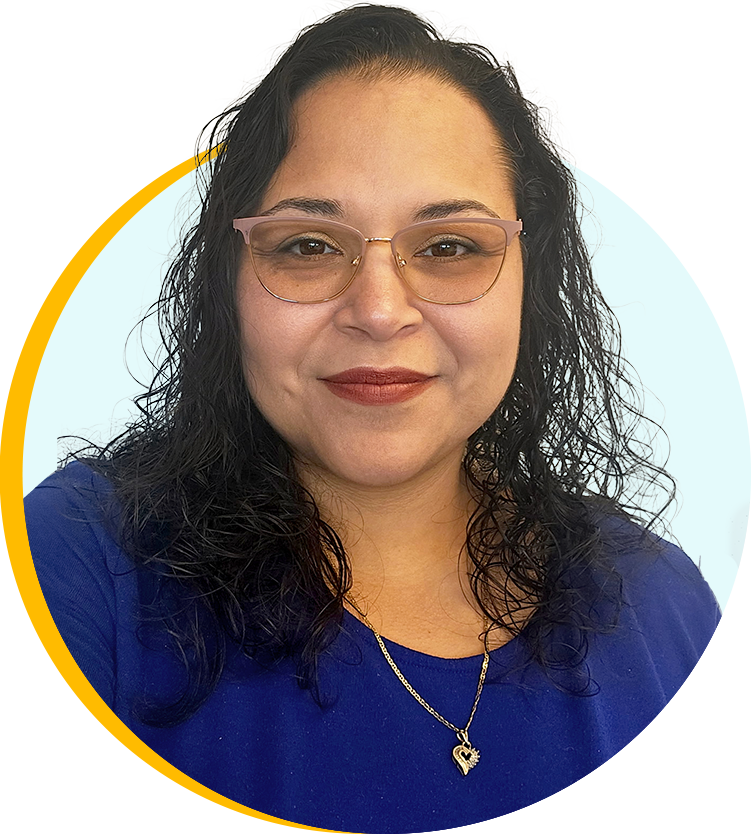
About the Author

Primary Therapist

Discover how our judgment-free, evidence-based care can support your teen mental health and your family

Request a call back and our admissions team will get in touch with you to answer all your questions.

We will support you in finding the right treatment for your teen – even if it is not ours.

We are here to help 24/7.

This field is for validation purposes and should be left unchanged.

Note we are not a crisis hotline, in case of emergency, please call 911 

Diego2

Diego Hernandez - Therapist (Davie)

Diego Hernandez is a Mental Health Counseling student completing his Master’s degree at Nova Southeastern University.

He is bilingual in English and Spanish and has extensive experience working with adolescents, families, and young adults from diverse cultural backgrounds who are navigating trauma, family conflict, depression, and anxiety.
Diego’s therapeutic approach centers on creating an empowering and supportive space where clients feel safe to fully express themselves. He integrates Acceptance and Commitment Therapy (ACT), Narrative Therapy, Cognitive Behavioral Therapy (CBT), and Dialectical Behavior Therapy (DBT) to help clients identify what truly matters to them and work toward meaningful, values-based change.

Diego also incorporates a systemic perspective, recognizing the importance of relationships and family dynamics in supporting long-term growth and emotional wellness.

Tatiana Shiber - Therapist (Davie)

Tatiana Lourenco Shiber, MS, RMHCI is a Registered Mental Health Counselor Intern with a Master’s degree in Clinical Mental Health Counseling from Nova Southeastern University. She has extensive experience working with adolescents navigating intellectual disabilities, trauma, self-harm, family conflict, depression, and anxiety. Tatiana has also worked with diverse populations providing culturally responsive and affirming care.
 
Tatiana’s therapeutic approach is strength-based and incorporates evidence-based modalities such as Cognitive Behavioral Therapy (CBT), Dialectical Behavior Therapy (DBT), Trauma-Focused CBT (TF-CBT) and Narrative therapy. Tatiana is passionate about creating a safe and supportive environment where clients feel empowered to build resilience, develop healthy coping skills, and foster meaningful change. She is dedicated to walking alongside her clients in their healing journey with compassion, authenticity, and respect.

Tiffany Rivera - Therapist (Davie)

Tiffany Rivera holds a Master’s degree in Clinical Mental Health Counseling from Walden University and a Bachelor’s degree in Psychology from Florida Atlantic University.

With a passion for empowering young people, Tiffany specializes in client-centered approaches that foster trust, growth, and resilience. She brings a strong background in mentoring youth and supporting individuals struggling with substance use, always meeting clients with empathy, patience, and genuine care.

Tiffany is known for her compassionate nature, strong communication skills, and unwavering commitment to helping adolescents navigate life’s challenges.

Ornella Barille - Therapist (Davie)

Ornella is a Registered Mental Health Counselor Intern and holds a Master’s in Clinical Mental Health Counseling from Nova Southeastern University. She is bilingual in English and Spanish and has extensive experience working with diverse populations, including children, families, and young adults. Ornella has worked in both K-12 schools and at the college level, where she has developed a strong commitment to helping adolescents thrive by supporting their personal and academic growth and empowering them to reach their full potential.

Her therapeutic approach centers on creating a safe and welcoming environment where clients can feel comfortable exploring their needs and expressing themselves authentically. Ornella utilizes a blend of mindfulness, existential therapy, and cognitive-behavioral techniques to empower clients in navigating life’s challenges.

Ornella’s compassionate approach fosters self-awareness and encourages clients to build effective coping strategies to achieve their therapeutic goals.

Jamie Namer - Therapist (Davie)

Jamie specializes in Marriage and Family Therapy (MFT) guiding individuals and families toward healthier, more fulfilling lives. With a focus on positivity, self-growth, and holistic healing, Jamie integrates spiritual perspectives and deep empathy into the therapeutic process. Using solution-based methods and emotionally focused therapy, Jamie helps clients navigate past trauma, enhance self-discovery, and strengthen relationships.

Jamie’s approach combines therapeutic techniques with mind-body healing practices such as meditation, mindfulness, and visualization. Experienced in working with children, adolescents, adults, families, and groups, Jamie specializes in addressing issues like anxiety, grief, self-confidence, burnout, family dynamics, depression, PTSD, and life transitions. The goal is to promote overall well-being and support clients in living a balanced, healthy lifestyle.

Dr. Maria Angelica Mejia – Clinical Director (Davie)

Dr. Maria Angelica Mejia’s therapeutic approach is rooted in empathy, resilience-building, and collaboration. As the Clinical Director for Adolescent Wellness Academy, she is dedicated to supporting high-risk teens in navigating trauma, emotional distress, and life’s challenges with a holistic and trauma-informed lens. Dr. Mejia specializes in working with adolescents facing issues such as suicide risk, self-harm, anxiety, depression, and family conflict, utilizing techniques like CBT, DBT, mindfulness, and strength-based therapy. With extensive experience in community mental health, private practice, and clinical supervision, Dr. Mejia has a proven track record of empowering teens to overcome obstacles and thrive. She holds a PhD in Marriage and Family Therapy bringing a depth of knowledge and compassion to her leadership role.

Kimberly Geller - Primary Therapist (Davie)

Kimberly is a compassionate and dedicated therapist with a Master’s degree in Social Work from Florida International University. Kimberly creates a nurturing and secure environment where clients can freely explore their emotions and embark on their journey toward healing and growth. Kimberly specializes in client-centered approaches that helps tailor her therapeutic methods to meet unique needs and goals. By fostering a collaborative therapeutic relationship, she empowers clients to develop effective coping skills and achieve meaningful progress in their mental health journey. Kimberly ensures that each person she works with feels understood and valued throughout their therapeutic process.

Zainub Fatta - Therapist (Davie)

Zainub holds a Master’s degree in Marriage and Family Therapy from Nova Southeastern University and has extensive experience treating a wide range of mental health issues in adults, teens, and children. She specializes in treating diverse mental health struggles such as anxiety, depression, trauma, bipolar disorder, social anxiety, anger management, etc. She also has a lot of experience treating addiction and substance abuse problems within various treatment centers. Zainub views mental health from a systemic perspective, emphasizing the significance of how one’s environment and childhood impacts them, which is why she also specializes in family therapy and couples therapy, when it comes to achieving holistic well-being. Passionate about empowering individuals to find their voice, she considers it a privilege to listen to their vulnerable stories and provide the support they need. Her therapeutic approach focuses on uplifting clients by building their confidence and challenging them to break old, negative patterns of thinking and behavior.

Krystine Garay

Krystine Garay – Licensed Mental Health Counselor

Krystine Garay is a licensed mental health counselor, marriage family therapist, and certified telehealth practitioner. Raised in Miami, Florida, and a member of the Hispanic community, she provides services in both English and Spanish. With five years of experience, she has worked with children, adolescents, and adults, focusing on domestic violence, substance abuse, family conflicts, co-occurring disorders, and mental health issues.
Krystine holds a bachelor’s degree in Psychology from Florida International University and a master’s degree with dual specializations in mental health and marriage and family counseling from Barry University. She is pursuing a doctorate in clinical psychology with a concentration in health psychology from Carlos Albizu University.
Her clinical experience includes rotations at Nicklaus Children’s Hospital, where she assisted children with co-occurring disorders using mindfulness exercises, cognitive-behavioral strategies, and dialectical-behavioral techniques.
Krystine believes in the power of personal growth and progress, and she is dedicated to fostering positive change in her clients’ lives.

Alyssa Mencucci – Therapist (Miami)

Alyssa is a dedicated master’s level clinician specializing in providing compassionate
therapy for adolescents and children facing severe mental health challenges. With a
deep understanding of the developmental stages and psychological needs of
adolescents and children, Alyssa offers expertise in addressing trauma-related issues,
guiding individuals through the complexities of grief, managing anxiety and depression,
navigating personality disorders, and supporting those dealing with PTSD. Alyssa uses
evidence-based techniques such as cognitive-behavioral therapy, DBT, play therapy,
and trauma-focused interventions to create a safe and nurturing environment for
healing. Alyssa believes in a client-centered approach, tailoring therapy to meet the
unique needs and circumstances of each individual. She creates a safe and nurturing
environment where adolescents and children can explore their emotions, develop
coping skills, and embark on a journey of healing and growth.

Dr. Jacqueline Pablos – Clinical Director

Vulnerability and connection are at the heart of Dr. Pablos’ therapeutic approach. As the
Clinical Director for Adolescent Wellness Academy, she aims to create a safe space for
clients to embrace their emotions and express their needs in healthier ways. Dr. Pablos
specializes in treating depression, anxiety, body image issues, bullying, eating
disorders, and self-harm behaviors using techniques like CBT, DBT, mindfulness, and
ACT.
With extensive training in hospitals and counseling centers, Dr. Pablos has a strong
background in helping teens and adults with co-occurring mental and physical health
disorders. She holds a Doctoral Degree in Clinical Psychology, with specialized training
at institutions like Florida International University, Jackson Memorial Hospital,
Clementine Monte Nido, and Nicklaus Children’s Hospital.

Kimberly

Kimberly Carlesi – Therapist (Miami)

Kimberly, a dedicated therapist with a Master’s Degree in Clinical Mental Health
Counseling from Florida International University, specializes in supporting individuals
with eating disorders, trauma, and substance abuse. She creates a safe, nurturing
environment for her clients’ healing journeys, drawing from diverse therapeutic
modalities like cognitive-behavioral therapy and dialectical behavior therapy. With a
focus on trust and collaboration, Kimberly empowers clients through personalized
interventions, fostering self-awareness and resilience.