When someone struggles with a mental health condition, the effects reach far beyond the person receiving treatment. Teenagers may feel confused, afraid, embarrassed, frustrated, sad, or even guilty as they try to understand what’s happening to someone they love. They may also worry about how the illness will affect their family, relationships, and future.
As a parent, one of the most important things you can do is help your adolescent understand mental illness, provide honest and age-appropriate answers, and remind them that they’re not responsible for fixing or managing another person’s condition.
If your young person is concerned about their own wellness, Adolescent Wellness Academy provides compassionate mental health care for teens ages 13-17 and for their families.
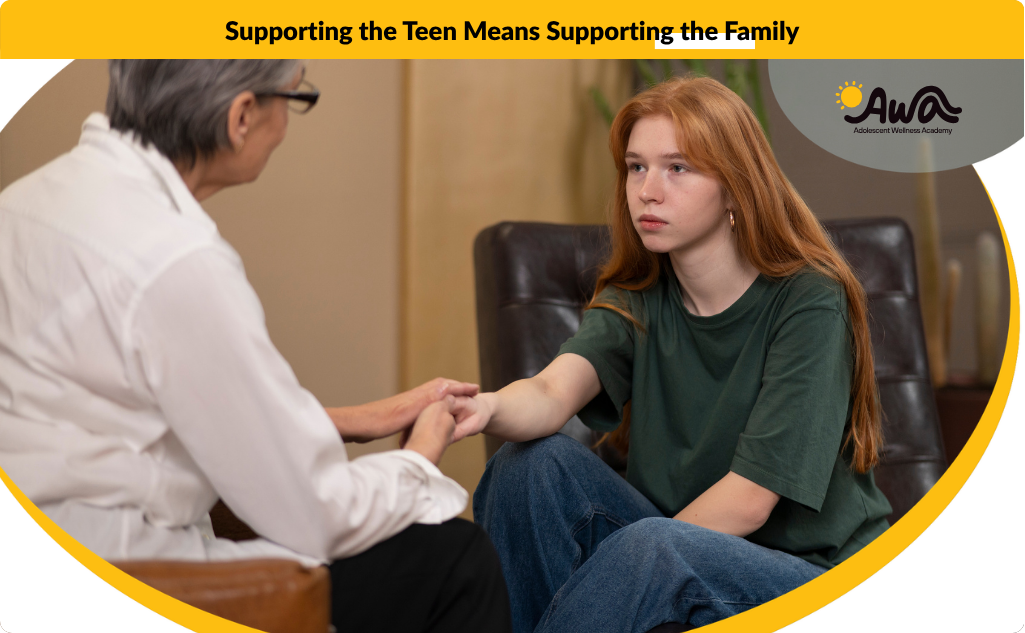
Is It Important to Talk About Mental Health Like We Do Physical Health?
Absolutely, because it helps eliminate fear and stigma. If a family member has diabetes, asthma, or heart disease, parents generally explain that the person has a medical condition that requires attention and treatment. Mental illnesses deserve that same approach.
According to the American Academy of Child and Adolescent Psychiatry (AACAP), this forthrightness helps teens understand that these are real health conditions, not personal weaknesses or character flaws. Just as someone can’t simply will away diabetes or pneumonia, someone experiencing depression, bipolar disorder, or another mental health condition needs appropriate medical care, too. Explain that:
- Mental health disorders influence a person’s thoughts, emotions, and daily behavior.
- Each condition is different, and symptoms vary from person to person.
- Treatment may include therapy, medication, continued professional support, or a combination of all three for effective management.
Most importantly, help your teen understand that mental illness isn’t something to be ashamed of and doesn’t define the person they love. It’s a health condition—not a reflection of someone’s character or worth.
Talking About Mental Health: Questions Your Teen May Ask
Young people are often curious but may hesitate to ask questions because they don’t want to upset anyone. Create opportunities for open, honest conversations without pressure. AACAP recommends using straightforward language, avoiding unnecessary medical details, and letting your teen know it’s okay to ask about the situation more than once. Here are 10 common questions and ways parents can respond
1. What happens when someone has a mental illness?
It might make it harder for a person to manage emotions, handle stress, maintain relationships, or navigate daily responsibilities. The experience is different for everyone, depending on the condition and its severity.
2. Why does my family member sometimes act differently?
Some mental health conditions affect emotions, thoughts, energy, and behavior. While their actions may be related to symptoms, that doesn’t mean hurtful behavior is acceptable.
3. Can anyone develop a mental illness?
Yes. Mental health disorders affect people of any age, background, or income level. They’re more common than many people realize.
4. Did I do something to cause it?
Absolutely not. You didn’t cause your family member’s mental illness. Nor is it your fault or your responsibility to manage.
5. Can I catch it like a cold?
No. Mental illness isn’t contagious. However, when someone they love is unwell, people close to them can experience anxiety, depression, stress, and other emotional difficulties.
6. Will my family member get better?
Many people improve with appropriate treatment and support. However, recovery looks different for everyone, and sometimes, managing a condition is an ongoing process.
7. Should I talk to other people about it?
You deserve support, but it’s important to respect your family member’s privacy, too. You can talk with a trusted adult, counselor, or therapist about your own feelings without sharing unnecessary private details.
8. Am I supposed to help take care of them?
You can show love, respect, and support, but you’re not responsible for their treatment or recovery. Instead, adults and healthcare professionals should manage the issues with them.
9. What if I’m angry, embarrassed, or scared?
These emotions are completely understandable. You can love someone and still feel frustrated, confused, or overwhelmed by their illness. All your feelings deserve to be heard.
10. What should I do if I’m worried about their safety or mine?
Tell a trusted adult immediately. If someone is in immediate danger, contact emergency services. You should never feel that you have to manage a crisis alone.

How Can You Help Your Teen Cope and Build Resilience?
The 7 Cs framework, developed by pediatrician Dr. Kenneth Ginsburg, offers beneficial insight for strengthening resilience in young people. These seven building blocks guide teens on how to maintain their mental and emotional health while navigating the challenges of having a family member with a mental illness.
- Competence. Help teens develop practical skills for managing stress, communicating feelings, and solving everyday problems.
- Confidence. Remind them that they can handle difficult emotions and situations. Encourage independence without expecting them to be strong all the time.
- Connection. Maintain relationships with supportive family members, friends, teachers, coaches, and counselors. Encourage teens to spend time with people they trust.
- Character. Reinforce empathy, compassion, respect, and healthy boundaries. Help teens understand that caring about someone doesn’t mean accepting harmful behavior.
- Contribution. Encourage meaningful activities, volunteering, hobbies, and helping others. Remind teens that they have value beyond their family’s challenges.
- Coping. Teach them methods to manage stress, including exercise, journaling, deep breathing, creative activities, and talking with trusted adults.
- Control. Help teens recognize what they can and can’t control. They cannot cure a family member’s illness, but they can make healthy choices, express their needs, and ask for help.
With open communication, emotional support, and self-care and coping skills, your teen will develop resilience while maintaining their own emotional wellbeing.
Encourage Your Teen to Thrive While Supporting Someone They Love
With honest conversations, consistent reassurance, and opportunities to build resilience, parents can help teens understand that mental illness is a health condition—not a family secret, a personal failure, or a burden they must carry alone.
Support services like what we offer at Adolescent Wellness Academy help your family thoughtfully handle these experiences. Our compassionate team goes above and beyond to support you and your teen on a healing journey.