How to Find a Therapist for My Teenager

If you’re trying to figure out how to find a therapist for your teenager, start with the level of care, not the name. 

Look at four things: how severe your teen’s symptoms are, how long they’ve lasted, how often the hard days come, and how much daily life is affected. That answer tells you whether weekly counseling is enough or whether your teen needs a structured program. 

At Adolescent Wellness Academy, we work only with teens ages 13 to 17. Here’s how we help parents figure out what their teen actually needs.

Start With the Level of Care

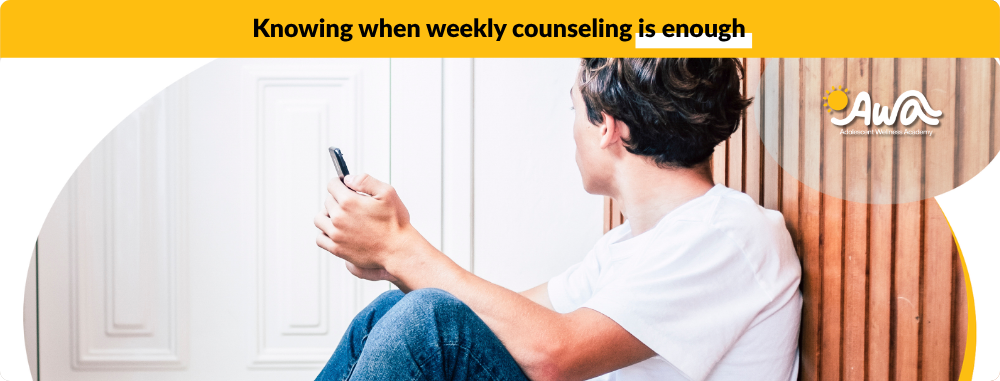
Weekly counseling fits a teen who’s struggling but still functioning: getting to school, holding on to friendships, and being able to talk and use what they learn between sessions. 

That’s the right starting point for a lot of families, and if it’s yours, teen counseling in Miami is exactly what you’re looking for.

A structured program fits when daily life is coming apart, or when months of weekly sessions haven’t moved anything.

We sort this with four filters:

  • Severity. How intense is what your teen is dealing with?
  • Duration. Weeks, or most of a year?
  • Frequency. Occasional hard days, or most days?
  • Impact. Contained, or spilling into school, friendships, and home?

If your honest answers are severe, long-running, frequent, and affecting everything, weekly sessions will probably underdeliver no matter how good the therapist is.

The National Institute of Mental Health is clear that matching treatment intensity to symptom severity is central to whether treatment works at all.
How to Find a Therapist for My Teenager

What Makes a Therapist Right for a Teen

Credentials get someone in the door. These are what decide whether your teen actually talks.

They specialize in adolescents, not just accept them. 

Working with a 15-year-old is a different skill set from working with adults. Ask whether teens are their primary population.

They have a real answer for resistance.

Almost every teen we meet arrives unhappy about being there. Our therapist, Jacqueline Pablos, considers that completely valid, and she watches what happens next.

“Teens acclimate. After the first couple of weeks, they stop fighting coming, because they feel like they have support here and they see that we’re advocating for them.”

They explain confidentiality to both of you. 

Your teen needs to know their sessions are theirs or they won’t be honest. You need to know you’ll hear about progress and safety. 

The American Academy of Child & Adolescent Psychiatry treats that balance as fundamental to adolescent therapy working. We hold the same line: you get the themes, the skills, and anything touching safety. Their words stay theirs.

They communicate with you. 

This is what parents tell us they want most and get least. Not a transcript of the session. Direction for what to do at home.

They’ll tell you when it isn’t working. 

The strongest sign of a good clinician is that they say your teen needs more than they can offer.

Five Questions to Ask Before Your Teen Meets Anyone

  1. Do you work primarily with adolescents?
  2. How do you handle confidentiality, with my teen and with me?
  3. What will you tell me, and how often?
  4. What’s your approach when a teen doesn’t want to be here?
  5. What happens if weekly sessions turn out not to be enough?

That last one matters most. It separates someone who’ll level with you from someone who’ll keep booking appointments.

Bring your teen into the choice where you can. Ask if they’d prefer a man or a woman, someone older or younger. If you can offer two options and let them pick, do it. A teen who chose walks in differently than a teen who was sent.

Not sure which level fits? That’s the first thing we sort out with every family, and it costs nothing to ask. Call us at 1-754-285-7576.

How to Tell If It’s Working

Most parents look for change too early. Here’s the real sequence.

Sessions one and two are groundwork. The first is a full assessment; the second builds the treatment plan. Real therapeutic work usually starts around session three.

The first few weeks can look worse before better. An early uptick in symptoms or behavior is common. Your teen is being asked to open things they’ve kept shut.

Six to eight weeks is where change shows. Jacqueline describes what parents usually notice by then: teens opening up more, coming to them to talk about how they’re feeling, symptoms easing, more cooperation at home. 

If your teen has shut down on you completely, our guide on getting your teenager to open up covers what helps in the meantime.

The earliest sign is small: your teen asks when their next session is. That question means trust is forming, and it usually shows up before anything else.

Two months in with none of this, and the problem is the fit or the level of care. Say so directly.

What kind of therapist is best for a teenager

When You’ve Tried Therapists, and Nothing Changed

This is where most families reach us. Not because they couldn’t find a therapist, but because they found several and the pattern repeats: their teen goes, says little, nothing shifts.

That’s often not a therapist problem. Some teens genuinely struggle in one-on-one conversations with adults. 

Sitting in a room explaining your problems to a grown-up is intimidating at fifteen. What changes things for a lot of teens is being in a room with other teens dealing with the same things, because peers reach kids in ways adults can’t. 

A weekly session can’t offer that, which is why our intensive outpatient program is built around after-school group work.

Signs Your Teen May Need More Than Weekly Therapy 

Consider a structured program when months of weekly teen therapy haven’t moved anything, school attendance is falling apart, there’s self-harm or talk of not wanting to be here, or your teen is isolating and daily functioning is slipping. 

For teens whose functioning has come apart entirely, our therapeutic day program provides full-day structure. 

For families who can’t make the drive, our Virtual IOP runs statewide.

How We Approach the Fit

Every family starts with us the same way: a clinical assessment to figure out what level of care actually fits, before anyone commits to anything. If weekly sessions are right, we’ll let you know. If we’re not the right program for your teen, we’ll tell you that too.

Whatever the level, you get a weekly coaching call with your teen’s therapist, a weekly parent support group led by our clinical director, and family work built into the treatment rather than added on. We can teach your teen skills here, but those skills need somewhere to land at home.

We’re in Davie, Miami, and Boca Raton, in-network with all major commercial insurance providers in Florida, and we verify your coverage before you decide anything.

If you’ve been searching a while and nothing has worked yet, that’s the conversation worth having. Book a free consultation.

Frequently Asked Questions

How do I find a therapist for my teenager near me?

Decide the level of care first, because it changes where you look. For weekly therapy, referrals from your teen’s pediatrician or school counselor usually beat cold directory searches. For anything more intensive, contact adolescent programs directly and ask for a clinical assessment before committing.

What kind of therapist is best for a teenager?

A licensed clinician who works primarily with adolescents: an LMHC, LMFT, LCSW, or psychologist. CBT and DBT have the strongest evidence for teen anxiety and depression. Experience with family systems matters too, since progress depends heavily on what changes at home.

What if my teenager refuses to go to therapy?

Get curious about the refusal before pushing. Most teens fear the therapist will report back to you, or that agreeing means admitting something is wrong with them. Framing therapy as a private space that belongs to them, not a consequence, opens the door.

My teen has been in therapy for months with no progress. Is that normal?

Slow stretches happen, but months without movement usually signals a mismatch rather than a bad therapist. One hour a week may not be enough for what your teen is carrying. Raise it directly and ask whether a more structured level of care would help.

How long should I give a therapist before switching?

Six to eight weeks. The first two sessions are assessment and planning, and symptoms sometimes rise before they fall. By two months you should see something shift. If nothing has, address it before switching, since the level of care may be the real issue.
About the Author

Clinical Director

Discover how our judgment-free, evidence-based care can support your teen mental health and your family

Request a call back and our admissions team will get in touch with you to answer all your questions.

We will support you in finding the right treatment for your teen – even if it is not ours.

We are here to help 24/7.

This field is for validation purposes and should be left unchanged.

Note we are not a crisis hotline, in case of emergency, please call 911 

Diego2

Diego Hernandez - Therapist (Davie)

Diego Hernandez is a Mental Health Counseling student completing his Master’s degree at Nova Southeastern University.

He is bilingual in English and Spanish and has extensive experience working with adolescents, families, and young adults from diverse cultural backgrounds who are navigating trauma, family conflict, depression, and anxiety.
Diego’s therapeutic approach centers on creating an empowering and supportive space where clients feel safe to fully express themselves. He integrates Acceptance and Commitment Therapy (ACT), Narrative Therapy, Cognitive Behavioral Therapy (CBT), and Dialectical Behavior Therapy (DBT) to help clients identify what truly matters to them and work toward meaningful, values-based change.

Diego also incorporates a systemic perspective, recognizing the importance of relationships and family dynamics in supporting long-term growth and emotional wellness.

Tatiana Shiber - Therapist (Davie)

Tatiana Lourenco Shiber, MS, RMHCI is a Registered Mental Health Counselor Intern with a Master’s degree in Clinical Mental Health Counseling from Nova Southeastern University. She has extensive experience working with adolescents navigating intellectual disabilities, trauma, self-harm, family conflict, depression, and anxiety. Tatiana has also worked with diverse populations providing culturally responsive and affirming care.
 
Tatiana’s therapeutic approach is strength-based and incorporates evidence-based modalities such as Cognitive Behavioral Therapy (CBT), Dialectical Behavior Therapy (DBT), Trauma-Focused CBT (TF-CBT) and Narrative therapy. Tatiana is passionate about creating a safe and supportive environment where clients feel empowered to build resilience, develop healthy coping skills, and foster meaningful change. She is dedicated to walking alongside her clients in their healing journey with compassion, authenticity, and respect.

Tiffany Rivera - Therapist (Davie)

Tiffany Rivera holds a Master’s degree in Clinical Mental Health Counseling from Walden University and a Bachelor’s degree in Psychology from Florida Atlantic University.

With a passion for empowering young people, Tiffany specializes in client-centered approaches that foster trust, growth, and resilience. She brings a strong background in mentoring youth and supporting individuals struggling with substance use, always meeting clients with empathy, patience, and genuine care.

Tiffany is known for her compassionate nature, strong communication skills, and unwavering commitment to helping adolescents navigate life’s challenges.

Ornella Barille - Therapist (Davie)

Ornella is a Registered Mental Health Counselor Intern and holds a Master’s in Clinical Mental Health Counseling from Nova Southeastern University. She is bilingual in English and Spanish and has extensive experience working with diverse populations, including children, families, and young adults. Ornella has worked in both K-12 schools and at the college level, where she has developed a strong commitment to helping adolescents thrive by supporting their personal and academic growth and empowering them to reach their full potential.

Her therapeutic approach centers on creating a safe and welcoming environment where clients can feel comfortable exploring their needs and expressing themselves authentically. Ornella utilizes a blend of mindfulness, existential therapy, and cognitive-behavioral techniques to empower clients in navigating life’s challenges.

Ornella’s compassionate approach fosters self-awareness and encourages clients to build effective coping strategies to achieve their therapeutic goals.

Jamie Namer - Therapist (Davie)

Jamie specializes in Marriage and Family Therapy (MFT) guiding individuals and families toward healthier, more fulfilling lives. With a focus on positivity, self-growth, and holistic healing, Jamie integrates spiritual perspectives and deep empathy into the therapeutic process. Using solution-based methods and emotionally focused therapy, Jamie helps clients navigate past trauma, enhance self-discovery, and strengthen relationships.

Jamie’s approach combines therapeutic techniques with mind-body healing practices such as meditation, mindfulness, and visualization. Experienced in working with children, adolescents, adults, families, and groups, Jamie specializes in addressing issues like anxiety, grief, self-confidence, burnout, family dynamics, depression, PTSD, and life transitions. The goal is to promote overall well-being and support clients in living a balanced, healthy lifestyle.

Dr. Maria Angelica Mejia – Clinical Director (Davie)

Dr. Maria Angelica Mejia’s therapeutic approach is rooted in empathy, resilience-building, and collaboration. As the Clinical Director for Adolescent Wellness Academy, she is dedicated to supporting high-risk teens in navigating trauma, emotional distress, and life’s challenges with a holistic and trauma-informed lens. Dr. Mejia specializes in working with adolescents facing issues such as suicide risk, self-harm, anxiety, depression, and family conflict, utilizing techniques like CBT, DBT, mindfulness, and strength-based therapy. With extensive experience in community mental health, private practice, and clinical supervision, Dr. Mejia has a proven track record of empowering teens to overcome obstacles and thrive. She holds a PhD in Marriage and Family Therapy bringing a depth of knowledge and compassion to her leadership role.

Kimberly Geller - Primary Therapist (Davie)

Kimberly is a compassionate and dedicated therapist with a Master’s degree in Social Work from Florida International University. Kimberly creates a nurturing and secure environment where clients can freely explore their emotions and embark on their journey toward healing and growth. Kimberly specializes in client-centered approaches that helps tailor her therapeutic methods to meet unique needs and goals. By fostering a collaborative therapeutic relationship, she empowers clients to develop effective coping skills and achieve meaningful progress in their mental health journey. Kimberly ensures that each person she works with feels understood and valued throughout their therapeutic process.

Zainub Fatta - Therapist (Davie)

Zainub holds a Master’s degree in Marriage and Family Therapy from Nova Southeastern University and has extensive experience treating a wide range of mental health issues in adults, teens, and children. She specializes in treating diverse mental health struggles such as anxiety, depression, trauma, bipolar disorder, social anxiety, anger management, etc. She also has a lot of experience treating addiction and substance abuse problems within various treatment centers. Zainub views mental health from a systemic perspective, emphasizing the significance of how one’s environment and childhood impacts them, which is why she also specializes in family therapy and couples therapy, when it comes to achieving holistic well-being. Passionate about empowering individuals to find their voice, she considers it a privilege to listen to their vulnerable stories and provide the support they need. Her therapeutic approach focuses on uplifting clients by building their confidence and challenging them to break old, negative patterns of thinking and behavior.

Krystine Garay

Krystine Garay – Licensed Mental Health Counselor

Krystine Garay is a licensed mental health counselor, marriage family therapist, and certified telehealth practitioner. Raised in Miami, Florida, and a member of the Hispanic community, she provides services in both English and Spanish. With five years of experience, she has worked with children, adolescents, and adults, focusing on domestic violence, substance abuse, family conflicts, co-occurring disorders, and mental health issues.
Krystine holds a bachelor’s degree in Psychology from Florida International University and a master’s degree with dual specializations in mental health and marriage and family counseling from Barry University. She is pursuing a doctorate in clinical psychology with a concentration in health psychology from Carlos Albizu University.
Her clinical experience includes rotations at Nicklaus Children’s Hospital, where she assisted children with co-occurring disorders using mindfulness exercises, cognitive-behavioral strategies, and dialectical-behavioral techniques.
Krystine believes in the power of personal growth and progress, and she is dedicated to fostering positive change in her clients’ lives.

Alyssa Mencucci – Therapist (Miami)

Alyssa is a dedicated master’s level clinician specializing in providing compassionate
therapy for adolescents and children facing severe mental health challenges. With a
deep understanding of the developmental stages and psychological needs of
adolescents and children, Alyssa offers expertise in addressing trauma-related issues,
guiding individuals through the complexities of grief, managing anxiety and depression,
navigating personality disorders, and supporting those dealing with PTSD. Alyssa uses
evidence-based techniques such as cognitive-behavioral therapy, DBT, play therapy,
and trauma-focused interventions to create a safe and nurturing environment for
healing. Alyssa believes in a client-centered approach, tailoring therapy to meet the
unique needs and circumstances of each individual. She creates a safe and nurturing
environment where adolescents and children can explore their emotions, develop
coping skills, and embark on a journey of healing and growth.

Dr. Jacqueline Pablos – Clinical Director

Vulnerability and connection are at the heart of Dr. Pablos’ therapeutic approach. As the
Clinical Director for Adolescent Wellness Academy, she aims to create a safe space for
clients to embrace their emotions and express their needs in healthier ways. Dr. Pablos
specializes in treating depression, anxiety, body image issues, bullying, eating
disorders, and self-harm behaviors using techniques like CBT, DBT, mindfulness, and
ACT.
With extensive training in hospitals and counseling centers, Dr. Pablos has a strong
background in helping teens and adults with co-occurring mental and physical health
disorders. She holds a Doctoral Degree in Clinical Psychology, with specialized training
at institutions like Florida International University, Jackson Memorial Hospital,
Clementine Monte Nido, and Nicklaus Children’s Hospital.

Kimberly

Kimberly Carlesi – Therapist (Miami)

Kimberly, a dedicated therapist with a Master’s Degree in Clinical Mental Health
Counseling from Florida International University, specializes in supporting individuals
with eating disorders, trauma, and substance abuse. She creates a safe, nurturing
environment for her clients’ healing journeys, drawing from diverse therapeutic
modalities like cognitive-behavioral therapy and dialectical behavior therapy. With a
focus on trust and collaboration, Kimberly empowers clients through personalized
interventions, fostering self-awareness and resilience.