How to Help a Teenager With Depression

Helping a teenager with depression starts with connection, not correction. Most teens never announce they are depressed. Parents see irritability, slipping grades, and withdrawal long before anyone says the word depression, and the instinct to question, fix, or discipline usually pushes teens further away. 

What works is the opposite: steady connection, validation before problem-solving, and knowing the signals that mean it is time for professional support. 

In this article, our primary therapist Jessa Grossman explains how to tell depression apart from normal adolescence, how to reach a teen who insists nothing is wrong, and the well-intentioned mistakes we see parents make every week at Adolescent Wellness Academy.

Is It Depression or Normal Teenage Moodiness?

Some moodiness is part of adolescence. What separates a phase from something clinical comes down to three filters our therapists apply every day: intensity, duration, and impact on daily functioning.

Normal adolescencePossible depression
MoodUp and down, irritable some days, fine on othersLow or irritable nearly every day
DurationPasses within daysLasts more than two weeks
ActivitiesDrops one hobby, picks up anotherStops enjoying most things, replaces them with nothing
SchoolOccasional rough patchGrades sliding steadily, missed assignments, absences
Sleep and appetiteTypical teenage patternsMajor, persistent changes in either direction

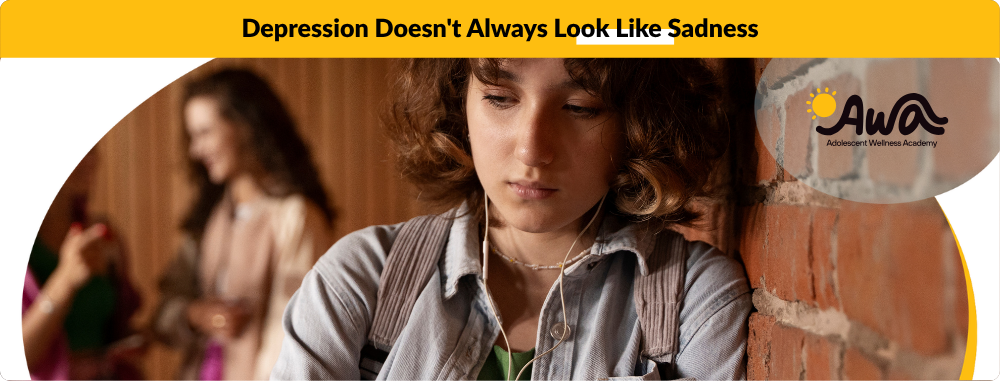
One thing catches many parents off guard: teen depression often does not look sad

The National Institute of Mental Health notes that depression in teens frequently shows up as frustration, irritability, and anger rather than visible sadness. 

A large part of what we see at intake is exactly that: parents describing an attitude problem or laziness that turns out to be a depressed teenager who never once looked sad at home.

School follows the same quiet pattern. A straight-A student brings home a few Bs, and it gets dismissed as a rough patch. Without support, that slide can accelerate until they are failing classes. A steady drop in school performance is one of the earliest measurable signs that something deeper is going on.

“Anything that shows a change in who the child once was. That’s what we ask parents to pay attention to.” Jessa Grossman, Primary Therapist, AWA
What You Can Do Right Now

If you recognize your teen in the column on the right, here is where to start:

  1. Open the conversation without pressure. Connection first. Interrogation shuts teens down.
  2. Validate before you fix. Your teen needs to feel understood before they will accept help.
  3. Keep home structure steady. Predictable routines and consistent follow-through. Not walking on eggshells, and not a lockdown.
  4. Loop in the school counselor. They see your teen six hours a day and can flag changes you cannot.
  5. Take safety signals seriously. Any talk of self-harm or not wanting to be alive means an evaluation now, not next month.
  6. Look into structured support built for teens. If symptoms have lasted weeks and daily life is affected, occasional therapy sessions may not be enough.

The rest of this article walks through the ones parents find hardest.

How to Reach a Teen Who Says Nothing Is Wrong

Most parents lead with questions. It feels natural. It is also the fastest way to get a bedroom door closed in your face.

The way in is usually not through the topic of depression at all. It is through a board game, a drive, an errand run together. You are not lowering your guard because you stopped worrying. You are building the safety that makes a real conversation possible. 

One of our therapists puts it in three words: connect before correct. You cannot challenge the slipping grades or the slammed doors until your teen believes you are on their side.

And when they do start talking, resist the urge to jump in with solutions. Sit in the discomfort with them. Ask what their world feels like right now. That is harder than fixing, and it matters more.

If you keep hitting a wall, that is often the point where an outside voice helps. Our team talks with parents in exactly this spot every week, and the first call is just a conversation: call us at 754-289-5136.

Mistakes That Make It Worse, Even With Good Intentions

Most parents do the best they can with what they know. These are the patterns we most often help families unwind:

  • Jumping into fixing mode. Solutions before understanding read as “I’m not really listening.” Get down to their level first and ask what is going on in their world.
  • Minimizing. “You have so much to be grateful for” tells a depressed teen their parent doesn’t get it, and it deepens the shame that keeps them quiet.
  • Correcting the behavior instead of asking what’s under it. The attitude, the isolation, the missed homework are symptoms. There is always a root underneath.
  • Inconsistent discipline. When rules and follow-through change day to day, teens end up walking on eggshells, and irritability climbs.
  • Making therapy a punishment. “You’re going because you’re acting out” guarantees resistance. “We see you’re struggling and this can help” opens a door.

None of this means parents cause depression. Guilt is the most common emotion we see parents carry through our doors, and adolescent depression is genuinely hard to spot, sometimes even for professionals. 

Bringing your child to help is the proof you are doing right by them, not evidence you failed.

When Family Support Is Not Enough

Roughly 1 in 5 adolescents experiences a major depressive episode in a given year, and depression at that level rarely resolves on its own. Seek a professional evaluation when:

  • Symptoms have lasted more than two weeks and are affecting school, friendships, or family life
  • Your teen has withdrawn from friends and the activities they used to love
  • There is any sign of self-harm or any statement about not wanting to be alive, even vague ones like “I don’t know why I’m here.” Treat these as urgent: get an evaluation immediately, and if there is immediate danger, call or text 988
  • Substance use has become regular or is affecting daily functioning

Many families dealing with teen depression in Florida assume the only options are weekly counseling or a residential facility. There is a middle level of care, and for most teens it is the right one. 

That is where structured teen depression treatment comes in: intensive enough to create real change, without pulling your teen out of school or your family out of its routine.

Not sure which level your teen needs? That is precisely what an assessment answers, and it costs nothing to ask: book a free consultation.

How We Help at Adolescent Wellness Academy

Most parents who call us think the choice is binary: either their teen is fine, or they need to be sent away somewhere. What they find out is that there is a middle option that fits around school.

Our intensive outpatient program for teens runs after school, 4:00 to 7:00 pm, three or five days a week. 

Teens get group therapy grounded in CBT, DBT, and ACT, plus one hour of individual therapy weekly, while staying in their own school and sleeping in their own bed. 

For teens who need more, our therapeutic day program provides full-day support with on-site academic help.

We are in-network with major commercial insurance, with locations in Davie, Miami, and Boca Raton.

You do not need to have it all figured out before you call. Recognizing that something is wrong is the first step, and you have already taken it.

Ask a Therapist: Helping Your Teen Through Depression

My teen is pulling away, snapping at everyone, and sleeping all day. Is this depression or just adolescence?

“Some moodiness and irritability, snapping at parents, can be common in adolescence. What we really focus on is the intensity, the duration, and the impact it’s having on their daily functioning. If there are significant mood changes, or significant changes in appetite or sleep that last more than a few weeks, that might be the time to start seeking professional help.”

What signs do parents tend to dismiss that they shouldn’t?

“Parents may overlook their kid withdrawing from activities they used to enjoy. They might think they’ve just outgrown that activity, which can happen. But if they’re not doing other things they enjoy either, that can show they are depressed. Along with major changes in sleep and appetite, anything that shows a change in who the child once was.”

My teen refuses to talk and insists nothing is wrong. What do I do?

“Don’t go straight into investigation mode. A lot of times a teen will shut down if they feel pressured to talk. Create opportunities for connection instead, whether that’s a walk or an activity the kid actually wants to do. Those natural moments make them feel less pressured, and more willing to open up on their own terms.”

What if they flatly refuse therapy?

“Get curious about the resistance. It could stem from them believing their parents think something is wrong with them, or that agreeing to therapy means admitting it. It can feel stigmatizing and create a lot of shame. Reframe it from ‘you need to go get help’ to ‘this is a safe place where you can talk freely without anyone in your personal life knowing.'”

How are parents involved once a teen starts treatment?

“Parents are collaborative partners here. We introduce family sessions after the first few weeks as clinically indicated, we run parent support meetings led by our clinical director, and the primary therapist gives parents a weekly coaching call to discuss their child’s progress, while still respecting the teen’s confidentiality.” At AWA, that structure is built into both our Therapeutic Day Program and our afterschool IOP, because a teen program that leaves the family out only fixes half the problem.

Frequently Asked Questions

Is depression common in teenagers?

Yes. About 1 in 5 U.S. adolescents ages 12 to 17 experiences a major depressive episode in a given year, according to the National Institute of Mental Health. Rates are higher among teen girls. Depression is one of the most common and most treatable mental health conditions in adolescence.

Can teenage depression go away on its own?

Mild low moods can pass, but clinical depression rarely resolves without support. Untreated, it tends to deepen and can affect school, relationships, and safety. Early treatment leads to significantly better outcomes, so if symptoms have lasted more than two weeks, an evaluation is worth it.

What should I not say to a teenager with depression?

Avoid anything that minimizes: “you have so much to be grateful for,” “snap out of it,” or comparisons to your own past struggles. Don’t ask them to justify why they feel depressed; they usually can’t. Validate first, and save advice until they feel heard.

Should I ask my teen directly about suicidal thoughts?

Yes. Asking does not plant the idea; that is a myth. Asking calmly and with love shows your teen they have someone to turn to and tells you whether they need immediate help. If they express any intent, contact the 988 Suicide and Crisis Lifeline or seek an evaluation right away.

Can parents make a teen’s depression worse without meaning to?

Yes, usually through minimizing or jumping straight to solutions. As Jessa Grossman explains, teens get worse “when they feel their parents don’t get them.” The fix is not perfection. It is becoming a safe place: connect first, validate, then correct.

About the Author

Primary Therapist

Discover how our judgment-free, evidence-based care can support your teen mental health and your family

Request a call back and our admissions team will get in touch with you to answer all your questions.

We will support you in finding the right treatment for your teen – even if it is not ours.

We are here to help 24/7.

This field is for validation purposes and should be left unchanged.

Note we are not a crisis hotline, in case of emergency, please call 911 

Diego2

Diego Hernandez - Therapist (Davie)

Diego Hernandez is a Mental Health Counseling student completing his Master’s degree at Nova Southeastern University.

He is bilingual in English and Spanish and has extensive experience working with adolescents, families, and young adults from diverse cultural backgrounds who are navigating trauma, family conflict, depression, and anxiety.
Diego’s therapeutic approach centers on creating an empowering and supportive space where clients feel safe to fully express themselves. He integrates Acceptance and Commitment Therapy (ACT), Narrative Therapy, Cognitive Behavioral Therapy (CBT), and Dialectical Behavior Therapy (DBT) to help clients identify what truly matters to them and work toward meaningful, values-based change.

Diego also incorporates a systemic perspective, recognizing the importance of relationships and family dynamics in supporting long-term growth and emotional wellness.

Tatiana Shiber - Therapist (Davie)

Tatiana Lourenco Shiber, MS, RMHCI is a Registered Mental Health Counselor Intern with a Master’s degree in Clinical Mental Health Counseling from Nova Southeastern University. She has extensive experience working with adolescents navigating intellectual disabilities, trauma, self-harm, family conflict, depression, and anxiety. Tatiana has also worked with diverse populations providing culturally responsive and affirming care.
 
Tatiana’s therapeutic approach is strength-based and incorporates evidence-based modalities such as Cognitive Behavioral Therapy (CBT), Dialectical Behavior Therapy (DBT), Trauma-Focused CBT (TF-CBT) and Narrative therapy. Tatiana is passionate about creating a safe and supportive environment where clients feel empowered to build resilience, develop healthy coping skills, and foster meaningful change. She is dedicated to walking alongside her clients in their healing journey with compassion, authenticity, and respect.

Tiffany Rivera - Therapist (Davie)

Tiffany Rivera holds a Master’s degree in Clinical Mental Health Counseling from Walden University and a Bachelor’s degree in Psychology from Florida Atlantic University.

With a passion for empowering young people, Tiffany specializes in client-centered approaches that foster trust, growth, and resilience. She brings a strong background in mentoring youth and supporting individuals struggling with substance use, always meeting clients with empathy, patience, and genuine care.

Tiffany is known for her compassionate nature, strong communication skills, and unwavering commitment to helping adolescents navigate life’s challenges.

Ornella Barille - Therapist (Davie)

Ornella is a Registered Mental Health Counselor Intern and holds a Master’s in Clinical Mental Health Counseling from Nova Southeastern University. She is bilingual in English and Spanish and has extensive experience working with diverse populations, including children, families, and young adults. Ornella has worked in both K-12 schools and at the college level, where she has developed a strong commitment to helping adolescents thrive by supporting their personal and academic growth and empowering them to reach their full potential.

Her therapeutic approach centers on creating a safe and welcoming environment where clients can feel comfortable exploring their needs and expressing themselves authentically. Ornella utilizes a blend of mindfulness, existential therapy, and cognitive-behavioral techniques to empower clients in navigating life’s challenges.

Ornella’s compassionate approach fosters self-awareness and encourages clients to build effective coping strategies to achieve their therapeutic goals.

Jamie Namer - Therapist (Davie)

Jamie specializes in Marriage and Family Therapy (MFT) guiding individuals and families toward healthier, more fulfilling lives. With a focus on positivity, self-growth, and holistic healing, Jamie integrates spiritual perspectives and deep empathy into the therapeutic process. Using solution-based methods and emotionally focused therapy, Jamie helps clients navigate past trauma, enhance self-discovery, and strengthen relationships.

Jamie’s approach combines therapeutic techniques with mind-body healing practices such as meditation, mindfulness, and visualization. Experienced in working with children, adolescents, adults, families, and groups, Jamie specializes in addressing issues like anxiety, grief, self-confidence, burnout, family dynamics, depression, PTSD, and life transitions. The goal is to promote overall well-being and support clients in living a balanced, healthy lifestyle.

Dr. Maria Angelica Mejia – Clinical Director (Davie)

Dr. Maria Angelica Mejia’s therapeutic approach is rooted in empathy, resilience-building, and collaboration. As the Clinical Director for Adolescent Wellness Academy, she is dedicated to supporting high-risk teens in navigating trauma, emotional distress, and life’s challenges with a holistic and trauma-informed lens. Dr. Mejia specializes in working with adolescents facing issues such as suicide risk, self-harm, anxiety, depression, and family conflict, utilizing techniques like CBT, DBT, mindfulness, and strength-based therapy. With extensive experience in community mental health, private practice, and clinical supervision, Dr. Mejia has a proven track record of empowering teens to overcome obstacles and thrive. She holds a PhD in Marriage and Family Therapy bringing a depth of knowledge and compassion to her leadership role.

Kimberly Geller - Primary Therapist (Davie)

Kimberly is a compassionate and dedicated therapist with a Master’s degree in Social Work from Florida International University. Kimberly creates a nurturing and secure environment where clients can freely explore their emotions and embark on their journey toward healing and growth. Kimberly specializes in client-centered approaches that helps tailor her therapeutic methods to meet unique needs and goals. By fostering a collaborative therapeutic relationship, she empowers clients to develop effective coping skills and achieve meaningful progress in their mental health journey. Kimberly ensures that each person she works with feels understood and valued throughout their therapeutic process.

Zainub Fatta - Therapist (Davie)

Zainub holds a Master’s degree in Marriage and Family Therapy from Nova Southeastern University and has extensive experience treating a wide range of mental health issues in adults, teens, and children. She specializes in treating diverse mental health struggles such as anxiety, depression, trauma, bipolar disorder, social anxiety, anger management, etc. She also has a lot of experience treating addiction and substance abuse problems within various treatment centers. Zainub views mental health from a systemic perspective, emphasizing the significance of how one’s environment and childhood impacts them, which is why she also specializes in family therapy and couples therapy, when it comes to achieving holistic well-being. Passionate about empowering individuals to find their voice, she considers it a privilege to listen to their vulnerable stories and provide the support they need. Her therapeutic approach focuses on uplifting clients by building their confidence and challenging them to break old, negative patterns of thinking and behavior.

Krystine Garay

Krystine Garay – Licensed Mental Health Counselor

Krystine Garay is a licensed mental health counselor, marriage family therapist, and certified telehealth practitioner. Raised in Miami, Florida, and a member of the Hispanic community, she provides services in both English and Spanish. With five years of experience, she has worked with children, adolescents, and adults, focusing on domestic violence, substance abuse, family conflicts, co-occurring disorders, and mental health issues.
Krystine holds a bachelor’s degree in Psychology from Florida International University and a master’s degree with dual specializations in mental health and marriage and family counseling from Barry University. She is pursuing a doctorate in clinical psychology with a concentration in health psychology from Carlos Albizu University.
Her clinical experience includes rotations at Nicklaus Children’s Hospital, where she assisted children with co-occurring disorders using mindfulness exercises, cognitive-behavioral strategies, and dialectical-behavioral techniques.
Krystine believes in the power of personal growth and progress, and she is dedicated to fostering positive change in her clients’ lives.

Alyssa Mencucci – Therapist (Miami)

Alyssa is a dedicated master’s level clinician specializing in providing compassionate
therapy for adolescents and children facing severe mental health challenges. With a
deep understanding of the developmental stages and psychological needs of
adolescents and children, Alyssa offers expertise in addressing trauma-related issues,
guiding individuals through the complexities of grief, managing anxiety and depression,
navigating personality disorders, and supporting those dealing with PTSD. Alyssa uses
evidence-based techniques such as cognitive-behavioral therapy, DBT, play therapy,
and trauma-focused interventions to create a safe and nurturing environment for
healing. Alyssa believes in a client-centered approach, tailoring therapy to meet the
unique needs and circumstances of each individual. She creates a safe and nurturing
environment where adolescents and children can explore their emotions, develop
coping skills, and embark on a journey of healing and growth.

Dr. Jacqueline Pablos – Clinical Director

Vulnerability and connection are at the heart of Dr. Pablos’ therapeutic approach. As the
Clinical Director for Adolescent Wellness Academy, she aims to create a safe space for
clients to embrace their emotions and express their needs in healthier ways. Dr. Pablos
specializes in treating depression, anxiety, body image issues, bullying, eating
disorders, and self-harm behaviors using techniques like CBT, DBT, mindfulness, and
ACT.
With extensive training in hospitals and counseling centers, Dr. Pablos has a strong
background in helping teens and adults with co-occurring mental and physical health
disorders. She holds a Doctoral Degree in Clinical Psychology, with specialized training
at institutions like Florida International University, Jackson Memorial Hospital,
Clementine Monte Nido, and Nicklaus Children’s Hospital.

Kimberly

Kimberly Carlesi – Therapist (Miami)

Kimberly, a dedicated therapist with a Master’s Degree in Clinical Mental Health
Counseling from Florida International University, specializes in supporting individuals
with eating disorders, trauma, and substance abuse. She creates a safe, nurturing
environment for her clients’ healing journeys, drawing from diverse therapeutic
modalities like cognitive-behavioral therapy and dialectical behavior therapy. With a
focus on trust and collaboration, Kimberly empowers clients through personalized
interventions, fostering self-awareness and resilience.